-> poetry books (dutch)
-> books in other languages
-> chapbooks
-> poetry and music
-> chronologies: other publications
-> writings on poetry
dutch poetry books
• vragen naar het begin. Amsterdam: Querido, 2026. ISBN 978-90-253-21673. 120 pages. (in preparation)
• dagtekening van liefdesvormen. Amsterdam: Querido, 2024. ISBN 978-90-214-8970-04. 80 pages.
• ecologica. Bleiswijk: Vleugels, The Netherlands, 2023. ISBN 978-94-93186-86-6. 64 pp.
• oneindige zin. Amsterdam: Querido, 2021. ISBN 978-90-214-3664-7. 88 pages.
• verdere bijzonderheden. Amsterdam: Singel Uitgeverijen|Querido, 2017. ISBN 978-90-214-0857-6. 56 pages.
• gestamelde werken. Amsterdam: Querido, 2012. ISBN 978-90-214-4243-3. 88 pages.
• Geluksbrenger. Amsterdam: Querido, 2008. ISBN 978-90-214-3503-9. 76 pages.
• Speling. Amsterdam: Querido, 2005. ISBN 90-214-6734-8. 56 pages.
• Logos. Amsterdam: Querido, The Netherlands, 2002. ISBN 90-214-6708-9. 48 pages.
• Locus. Amsterdam: Querido, The Netherlands, 1998. ISBN 90-214-6643-0. 56 pages.

“The Dutch poet for readers with ears is Rozalie Hirs. You could always hear in her work that she is a composer, somebody who is used to listening to the world and to language.” – Marc van Oostendorp, Neerlandistiek
“It is her most daring and possibly most personal collection to date, in the sense that the poet’s voice sounds more pervasively forceful than ever” – Helena Van Praet, Poëziekrant
“The best-kept secret of Dutch poetry. Rozalie Hirs writes poems like no one else does. Lyrical, musical, intuitive and very precise.” – Joost Baars, De Dolfijn
“That way the words of Hirs, who is also active as a composer, are like music: the chords flow into one another rhythmically, quite oblivious of the boundaries of a sentence.” – Jeroen Dera, De Standaard
“Hirs has managed to fashion a very urgent contemporary problem, climate change, into a lyrical stream of words. Doing so, she connects the magic of poetry to the biting irony of protest.” – Helena Van Praet, Poëziekrant
“The reader of this collection will be poised between despair and being profoundly moved.” – Dietske Geerlings, Tzum
“This is because Hirs succeeds at seamlessly weaving together climate problems and (poetic) images of what makes us human, such as love or spirituality.” – Helena Van Praet, Poëziekrant
“These verses without punctuation teem with ambiguities.” – Jeroen Dera, De Standaard
“In other words, language has a dual function here: the words in these poems do not merely call our behavior into question, they also render homage to the unendingness of nature, life, and our imagination. This vital idea of space helps to explain why Hirs hardly uses any punctuation and tends toward destabilizing techniques such as apokoinou and asyndeton, such that sentences seem to run on forever. Hirs’s masterful use of apokoinou is to be understood in this context of a condensed, vitalist manner of communicating.” – Helena Van Praet, Poëziekrant
“Just as much as life on earth, the use of language obliges you with every choice you make by its consequences. That is why it is so impressive how Hirs makes the reader into a participant: you cannot read this collection without making choices, without considering what you are doing.” – Dietske Geerlings, Tzum
“The lingual power to create a world comes with obliging consequences; the idea of care, not only for each other but also for Earth, is a central concern of this collection.” – Helena Van Praet, Poëziekrant
“In the ‘ecologic’ of poetry, Hirs notates this ecological mix-up, without diminishing the deep sense of beauty she still experiences in nature.” – Jeroen Dera, De Standaard
“From this it follows that there is still a lot we do not know (yet) and that (pristine) nature also has a dark, unknown side that we should honor.” – Helena Van Praet, Poëziekrant
“Reading is at the same time creating and living, just as writing is.” – Dietske Geerlings, Tzum
“That way, this poetic Atlantis, both gorgeous and ominous, vacillates between hope and bewilderment, poetry and discourse.” – Helena Van Praet, Poëziekrant

“Once more, in this collection Hirs proves that she can create a play of poetic language like nobody else. (…) Hirs’s ingenious tour de force stands right in the twenty-first century.” – Helena Van Praet, De Reactor
“Departing from this moment of receptivity, Hirs embarks on a surprising and overwhelming exploration of language, time, space, humanity, nature, perception, memory.” (Anne ter Beek, Awater)
“The new collection is titled oneindige zin, and all meanings of the word ‘zin’ apply. This poetry is sensual, has an appetite for enjoyment and is looking for meaning, but can also be read as one unending complete sentence without punctuation.” – Piet Gerbrandy, Poëziekrant
“The title of the section ‘de magie van een mogelijk heden’, too, is very meaningful, as there are many possibilities [‘mogelijkheden’] in language, but all those lingual constructions will always again form a possible present: the moment of writing, the moment of reading, the moment of listening.” – Dietske Geerlings, Tzum
“It pays to read these poems out loud, because then the continuous play with sonic and verbal associations and contrasts comes into focus all the more. (…) Reinforced by alliterations and assonances, a composed, dazzling fabric of language unfolds.” – Anne ter Beek, Awater
“Often, the poet makes use of a narrative style full of imagery, which helps a tentative reading. Language smoothly flows onward by way of a play of rhythm and sound.” – Pauliene Kruithof, Friesch Dagblad
“That way, Rozalie Hirs’s infinite sense is connected to infinite being, which keeps on flowing after our death. Hirs captures bits of this stream in her poetry and renders the heartbeat of language audible and palpable, constantly appealing to the reader to co-create an imaginary world in which poet and reader fleetingly coincide in language.” – Dietske Geerlings, Tzum
“Hirs has managed to push poetry beyond language without leaving it entirely and that is an impressive achievement.” – Anne ter Beek, Awater
“In the work of Rozalie Hirs, poetry and music flow into one another in a natural manner. (…) Music full of glimmering sonic poetry, and a poetry that sings beyond the sentence.” – Mark van de Voort, VPRO Gids

“There are only very few collections that I read voraciously directly upon publication. This is one. It looks like one big exercise in deconstruction, but Rozalie Hirs is a poet of natality, of the most radical ‘yes’ I know. And verdere bijzonderheden is simply once again better than her last one. What an oeuvre this is becoming.” – Joost Baars, Nomination Awater Poetry Prize, Winter 2018
“I love the playful, musical, and at the same time meaningful poetry of Hirs. In this collection, inside their formal solidity, the poems are exceptionally mercurial and exciting.” – Edwin Fagel, Nominatie Awater Poetry Prize, Winter 2018
“What surprises me time and again, collection after collection, is her ingenuousness, that takes the form of an infectious enthusiasm and well-meaning curiosity. Consequently, in her work, she keeps asking questions, without any pathetic ordeals and in all freshness, as to the how, the what, and the why of, in this case, poetry.” – Alain Delmotte, Dighter
“All sorts of things emerge, distant and close by, by which the condition of the words and the images is guarded in such a way that they do remain free to connect, at will, temporarily, to the words next to them but also to a sentence further down in the poem. There is no end to new creation, transformation, connection and disappearance. And that’s not even talking about how words with their sounds (rhymes) and meanings give rhythm to sentences and then suddenly hold back their pace again. A continuous being born and disappearing to her senses and mind; an organic happening, presented to us by this fantastic poet.” – Maud Ockers, Vrouwenbibliotheek
“Rozalie Hirs celebrates life in this collection: sensually, singing” – Remco Ekkers, Tzum weblog
“Quietly, Hirs is working on a remarkable body of work. In it, the entire cosmos is always heard, and it’s the question if we’re dealing with one cosmos, or several. At the same time, verdere bijzonderheden is her most grounded collection, her most embodied one too, with a remarkable number of poems being about birth. Every fibre of Hirs’s poetic nature is saying ‘yes’ to the world into which we are thrown.” – Nadine Ancher: interview with Joost Baars, AD/ BN De Stem
“Upon opening verdere bijzonderheden (further particulars), the sixth poetry volume of Rozalie Hirs, immediately a distinct voice starts to sound, a modest, yet clear voice, that takes advantage of the musicality (as well as the semantics) of language in optimal fashion.” – Edwin Fagel, Awater, The Netherlands, 2018

“Hirs likes to go all the way, and thereby reaches for the highest points. She is a composer as well. Her best poems ‘sing’ and have a powerful melody. Ever since her debut collection from 1998, her development can be traced clearly. If the poems in Locus (1998) and Logos (2002) seemed traditional when taken by themselves, already the second collection was conceptually organized. Logos is a through-composed opus about the human body. In reading poem by poem, you can escape the concept, but on the middle pages it is clear as daylight what the poet’s intentions are. There, a skinned body points to two- or three-letter codes referring to the alphabetically ordered poems in the collection. Here, I think, Hirs made use of the constructive achievements of her education in chemical technology and composition. It was the first impulse for three subsequent volumes of poetry of ideas. In Speling (2005) the concept was still very modest. On the first 39 pages, the poems grow, more or less regularly, one line at a time. Then the system falters, and finally the lines fall apart all across ten pages. In Geluksbrenger (2008) Rozalie Hirs made further strides towards disintegration, especially syntactically. Her poetry did no longer obey linguistic laws. Her lines escape the rules of language and started even to swarm about guided by the typesetter’s hand. gestamelde werken (work in stuttering), too, finds Hirs toying with the rules of communicative language. Rather than in proclamation her message is in sound and the atmosphere that is evoked thereby. A happy example of that is offered by one of the shortest poems in the collection. In her longer poems, Hirs constructs such atmospheres in no less sonorous ways. […] Hirs’ poetry intrigues me. Her stammering may be constructed, most of all she seems to be out on an investigation. And her investigations are a poetic adventure. Also for readers who are curious.” – Arie van den Berg, NRC Handelsblad, The Netherlands, 2013
“The poet Rozalie Hirs is an impressionist who likes to reveal how her work comes about. Instead of merging splinters into a natural whole, she breaks unities down to sparkling shards. What remains is often a stuttering, yet not that of a desperate poet who is not able to word the unsayable. Rather, Hirs tries joyfully to factorize the sayable. Her poetry is constructed through and through, while her starting point often is an experience of the senses, reminding of the Dutch poet Herman Gorter. She writes sensitive verses that ideosyncratically strive for a balance between romanticism and mathematics. [..] An important motif in gestamelde werken (work in stuttering) is the dawn of a new day, waking up to open your eyes for the light. In the first poem, the eyes set off into the morning like butterflies. In subsequent lines, poppies and cornflowers bloom and dreams are compared with silkworms that go to meet a sun in love. What they spin, however, is not silk but language. As soon as you try to see what it says on the level of words and word groups, you get lost, but if you read the poem out loud a few times, a convincing whole emerges. The second series involves an intriguing process of dismantling and repeated assembly. The material is given by the opening poem. [..} Hirs makes groups of words and sentences flow into one another in such a way that a polysemous stream of language arises. Some lines further on, the human figure is strikingly described as a ‘skin rock of water’. We are at once solid and fluid. The same holds for the poems, thorough constructions that are as ungraspable as water.” (Piet Gerbrandy, De Groene Amsterdammer, The Netherlands, 2012)
“Hirs’ work goes straight into the cosmic noise and calls for action in utter subjectivity. See, just as you are seen. Name, just as you are named. Create, just as you are created. And read like a creator: stammering.” – Joost Baars, Poëziekrant, Belgium, 2012

“The musical poetry of Geluksbrenger (Lucky Charm) is constructed along the line of a ‘counterpoint’. Within a poem, Hirs seems to be stacking different poems on top of each other, processing them, splicing them, mixing them, shaking them, letting them flow into one another. And this is one single motion. In one breath. In sustained breath. However composed and constructed her poems may be: the writing never feels artificial. Her poems desire. Her poems are blazing with exuberance, offering a large choice of possibilities. […] And the mill keeps turning many a poem long, the words keep on coming, the words are streaming. A stormy homecoming. Technically, she achieves this word-stream effect by eliding the punctuation marks (consistently every poem starts with a capital, surely a detail, but indicative of a striking meticulousness). Ever since Apollinaire this technique is an old trick but it works. Sentences seem to form bridges across each other, to overcome one another, to be ahead of each other, to inflate one another. This way poems appear that are chock full of anacolutha: a deconstructive stylistic device that is being used throughout the collection and that, as has been mentioned, keeps its effect of surprise.” – Alain Delmotte, Poëzierapport, Belgium, 2009


poetry books in other languages
• ecologica (bilingual; Italian translation: Patrizia Filia), Catania: NOUS Editrice, Italy, 2026 (in preparation).
• spor al lykkebringer (Danish translation: Birthe Lundsgaard), Copenhagen: Melodika Forlaget, Danmark, 2021. ISBN 978-87-972522-5-3. 96pp.
• ahora es una rosa (Spanish translation: Diego Puls), Montevideo: Yauguru Books, Uruguay, 2019. ISBN 978-9974-890-33-6. 48pp.
• gestammelte werke (Dutch, English, German: original languages; German translation: Daniela Seel, Rozalie Hirs, Ard Posthuma; French translation: Henri Deluy, Kim Andringa, Daniel Cunin; Spanish translation: Diego Puls; English translation: Donald Gardner, Willem Groenewegen, Moze Jacobs; Russian translation: Nina Tarhan Mouravi; Swedish translation: Boerje Bohlin; Chinese translation: Aurea Sison; Albanian translation: Papleka Anton; Serbian translation: Jelica Novaković; Croatian translation: Radovan Lucic; Lithuanian translation: Ausra Gudaviciute, Gytis Norvilas), Berlin: kookbooks, 2017. Germany. ISBN 978-39-374-4567-0. 240pp. Buy at Amazon.
• život mogućnosti (Serbian, Croatian translation: Jelica Novaković, Radovan Lučić). Banja Luka: Kuća Poezije/Biblioteka Prevodi, Bosnia & Herzegovina, 2014. ISBN 978-99-955-8050-6. 124 pages.
• ein tag (German translation: Ard Posthuma, Jan Oberländer, Rozalie Hirs). Berlin: hochroth Verlag, Germany, 2014. ISBN 978-3-902871-50-3. 40 pages. Buy at hochroth.


chapbooks (bibliophile)
• Curvices and musicles (English; original language). Bleiswijk: Uitgeverij Vleugels, The Netherlands, 2013. Bibliophile (chapbook). 24 pages.
• Het komt voor (image: Marijke van Warmerdam). Hilversum: Uitgeverij 69. 2008. The Netherlands. Bibliofile (chapbook). 14 pages.


poetry and music
A large number of Rozalie Hirs’ musical works are based on her own poetry. Some examples include: In LA (2003) based on the poem “In LA” from Speling (2005); hello little thistle (2004) based on “o kleine distel” from ecologica (2023); Pulsars (2007) based on “Pulsars” (2006); Bridge of Babel (2009) based on “Bridge of Babel” (2009); arbre généalogique (2011) based on “Stamboom,” translated by Henri Deluy, from Geluksbrenger (2008); atlantis ampersand (2015) based on the cycle “atlantis &” from ecologica (2023); dreams of airs (2017-18) based on various poems and cycles from Geluksbrenger (2008), gestamelde werken (2012), and verdere bijzonderheden (2017); hand in hand (2020) based on the cycle “hand in hand,” translated by the author into German, from oneindige zin (2021); artemis (2022) based on several poems selected from the cycle “magie van een mogelijk heden,” translated by the author into German, from oneindige zin (2021); al dat groen en blauw (2023) based on various poems from ecologica (2023).
Her portrait album Pulsars (Attacca Productions, 2010) explores the multilingualism and simultaneity of streams of meaning in three electroacoustic works based on her own texts, In LA (English version; 2003, 2010 rev.), Pulsars (English; 2007), and Bridge of Babel (multilingual; 2009). In 2025, two portrait albums were released: Infinity Stairs, featuring her solo and chamber works, including article 5 [delphin, gekrümmte zeit] (German version; 2008, 2022 rev.); Rosehart, focused on her orchestral compositions, including arbre généalogique (French translation: Henri Deluy; 2011). In 2026, her portrait album Dreams of Airs (multilingual; 2017-18), based on the eponymous poetry and music cycle, will follow.
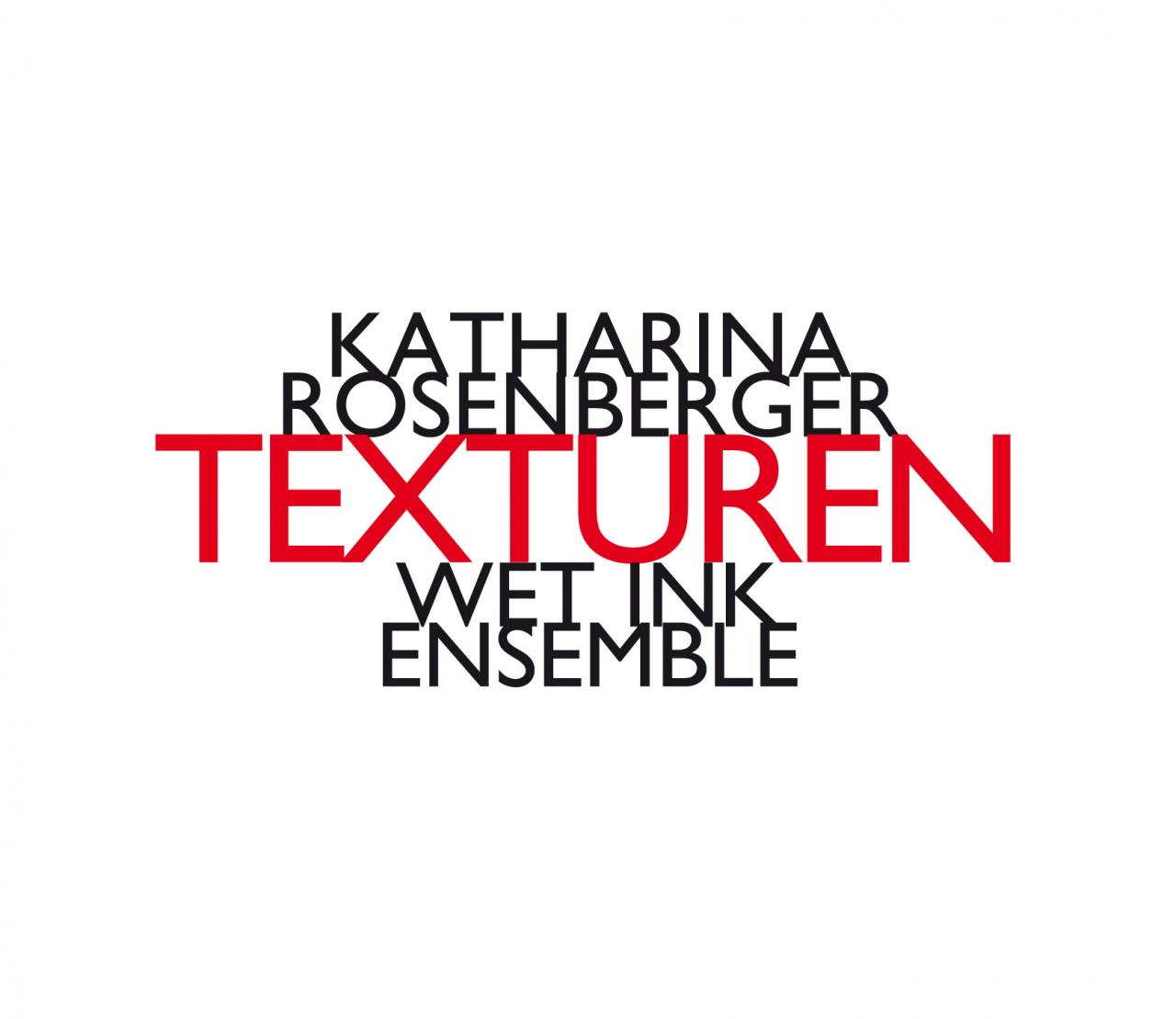
In 2008 and 2010 respectively, Rozalie Hirs wrote poems for the music compositions Spaces of Blank by Michel van der Aa, that was performed and recorded by Concertgebouw Orchestra, and texturen by Katharina Rosenberger, performed and recorded by Wet Ink Ensemble.
poetry in recording (portrait albums)
• ‘een dag’ [1-2] (English translation: Donald Gardner), ‘de dag rolt de straat op’ (German translation: Rozalie Hirs, Daniela Seel), ‘long at present longing’ [0-4], ‘tuimelaar’, ‘die deed mijn schoenen aan’ (English translation: Donald Gardner), ‘zeg liefde’ (English translation: Donald Gardner). dreams of airs (poetry and music cycle; 2017-18; multilingual). Dreams of airs (CD, 2026) Amsterdam: Iris or Hazel, 2026 (in preparation).
• ‘Stamboom’ (French translation: Henri Deluy), arbre généalogique (music, poetry; 2011). Rosehart (CD, 2025). Amsterdam: Iris or Hazel, 2025.
• article 5 [delphin, gekrümmte zeit] for soprano solo (poetry, music; 2008; German version, 2022). Infinity stairs (CD, 2025). Amsterdam: Iris or Hazel, 2025.
• Pulsars (music, poetry; 2006-07; English), In LA (music, poetry; 2003; English version: 2010), Bridge of Babel (music, poetry; 2009; multilingual). Pulsars (CD, 2010). Amsterdam: Attacca Productions, 2010;
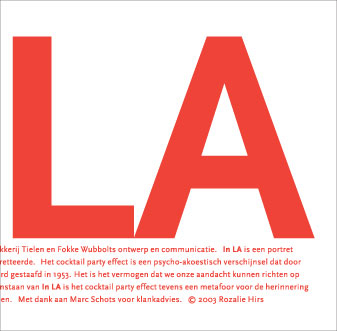
• In LA (music, poetry, 2003). In LA (cd single, 2003; Dutch). Boxtel: Drukkerij Tielen. 2003.



poems in other recordings
• ‘fern’ [1-5] (2010), interludes, texturen (English, original language; music: Katharina Rosenberger; poetry: Rozalie Hirs). Zürich, Switzerland: Hat [now] ART. 2012.
• ‘white away and back’, ‘dream I’ (2008), Spaces of Blank, (English, original language; music: Michel van der Aa; poetry: Anne Carson, Emily Dickinson, Rozalie Hirs). DQM 01. Amsterdam: Disquiet Media. 2010; HORIZON 3. Recordings of the 2008-09 Season (Royal Concertgebouw Orchestra). Amsterdam: RCO Live. 2010.
• ‘slaaplied voor een duivel’ (1994), Slaaplied voor een duivel for music box and spoken voice (music, poetry: Rozalie Hirs; spoken voice: Thom Hoffman), Music Box. 32 compositions for music box, EW 9413. Hilversum: VPRO Eigen Wijs. 1994.

libretto
In 2005 Rozalie Hirs wrote the libretto of the opera De genezing van de krekel (E: The Cricket Recovers; D: Die Grille) by Richard Ayres, commissioned by Almeida, London, and Aldeburgh Festival, based on the novella with the same name by Toon Tellegen. The libretto was translated into English by John Irons; the stage set was designed by the Brothers Quay. The opera has received subsequent productions, at Holland Festival, directed by Pierre Audi (2011), with Junge Oper Stuttgart (2007), at Theater Basel (2017), and Tanglewood (2019).
poetry and visual arts
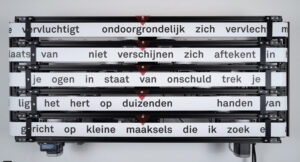
For a listing of projects in collaboration with visual artists, designers, and archtiects, please visit the visual arts section.
chronologies
Since 1991, Hirs’ poems have appeared in numerous anthologies and literary magazines; see below for the respective chronologies. For an alphabetical listing of all published poems visit the bibliography section.
anthologies
• ‘wezens van de kaas’ [1-11], Sonic Cheese X Atmospheric Terroir, exhibition by Frouke Wiarda and Judith van der Elst, Watou, July-August 2026 (in preparation);
• ‘magic of a possible presence’ [1-2] (English translation: Michele Hutchison), World Poetry Almanac, Mongolia, China, 2025 (in preparation);
• ‘tuin’, Tuinscheurkalender 2026, Uitgeverij Atlas Contact, Amsterdam, 2025;
• ‘onuitsprekelijke’, vensterverzen (editor: Ricardo Liong-a-kong), Bukistan, Hengelo, 2025;
• ‘elk gedicht’/ ‘cada poema’ (biligual; Spanish translation: Micaela Van Muylem), Bombing of Poems, Poetry International, Rotterdam, The Netherlands, May 2025;
• ‘door het park’, Amsterdam 3hoog achter, monography of visual artist Jet Nijkamp, WG Kunst, Wilhelmina Gasthuis, Amsterdam, The Netherlands, April 2025;
• ‘alweer die buitensporige’, De 44 beste gedichten van de Herman de Coninckprijs 2025, Behoud de Begeerte, Antwerpen, Belgium, 2025;
• ‘de hemel boven montpellier’, Liever de liefde Poetry Calendar 2025 (photography: Willem Popelier), Uitgeverij Plint, 2024;
• ‘de grote beer’, Er is geen nacht oneindig en geen stilte stil, Nacht van de Poëzie, ILFU, Utrecht, The Netherlands, 2024;
• ‘in stilte vlecht je’, Het warenhuis van de literatuur, Liber Amicorum voor Aad Meinderts, Literatuurmuseum, Den Haag, The Netherlands, 2024;
• ‘vlak naast de waterval’, Het komt goed (editor: Elisabeth Lockhorn), Van Oorschot, Amsterdam, 2024;
• ‘geef je over’, De 44 beste gedichten van de Herman de Coninckprijs 2024, Behoud de Begeerte, Antwerpen, Belgium, 2024;
• ‘uitingen’, mateloos verlangen, XSAGA & Uitgeverij Podium, Amsterdam, 2023;
• ‘Toen leerde ik (0-38 jaar)’, woorden temmen: Toon de stad (editors: Lies Van Gasse, Laurens Ham), Grange Fontaine, Amsterdam, 2023;
• ‘droom van land 2071’, power to the planet (editor: Rindert de Groot), Studio Zeitgeist, Amsterdam, 2022;
• ‘vuurplaats’, De 44 beste gedichten van de Herman de Coninckprijs 2022, Behoud de Begeerte, Antwerp, Belgium, 2022;
• ‘van roos tot enig glaswerk’, Een mogelijk begin van veel (poet’s portraits; essays: Hester van Hasselt; photography: Bianca Sistermans), Singel Uitgeverijen|Querido, Amsterdam, 2021;
• ‘[wolf]’, Een wonderprachtig dier (illustrations: Britta Teckentrup; editor: Marlous van Mourik), Uitgeverij & Ploegsma, Amsterdam, 2021;
• ‘een prettige avond’, 600 gedichten over leven, liefde en dood (editor: Jozef Deleu), Uitgeverij Meulenhoff, Amsterdam, 2021;
• ‘droom van land 2071’, Zwemlessen voor later – klimaatpoëzie, Uitgeverij Vrijdag, Antwerp, Belgium, 2020;
• ‘In bad’, Van kop tot teen (editors: Charlotte van den Broeck, Jeroen Dera), woorden temmen Series, Grafon, The Netherlands, 2020;
• ‘[plaatselijk, tijdelijk]’, Kus of ik zoen, Rainbow pockets, Uitgeverij Rainbow, Amsterdam, 2020;
• ‘es will und willst du’ [8] (German) POESIS (curator: Friedrich Block), Kulturtempel, Kassel, Germany, 2019;
• ‘a day’ [1-3], ‘who put on my shoes’, ‘prologos’, ‘of the wonder is word’, ‘ub313 2003’, • ‘life possibilities’, ‘dreams 1989’, ‘landshape’, ‘a no’ (English translation: Donald Gardner), Anthology of Dutch poets, Mosaic Press, Oakville, Canada, 2018;
• ‘a day’ [1-3] (English translation: Donald Gardner), World Poetry Almanac, Mongolia, China, 2017;
• ‘Stamboom’, ‘Wereld van nu’, Vorm & Visie. Geschiedenis van de concrete en visuele poëzie in Nederland en Vlaanderen (editor: Renaat Ramon), Poëziecentrum, Ghent, Belgium, 2014;
• ‘het wil je en wil je’, ‘de dag rolt de straat op’, De 100 beste gedichten van 2013, De Arbeiderspers, Amsterdam, 2014;
• ‘van roos tot enig glaswerk’, Blauw Goud (editors: Thomas Möhlmann, Patrick Roubroeks), Nieuw Amsterdam, Amsterdam, 2013;
• ‘een engel’, Erasmus van Amsterdam (editor, visual art: Neel Korteweg), Timmer Art Books, Oosterhout, 2013;
• ‘lieve lente lacht’, Waarom ben je niet bij mij (editor: Arie Boomsma), Uitgeverij Prometheus|Bert Bakker, Amsterdam, 2013;
• ‘sterf je 3/8/— 18:00’, ‘eierschaal, tinnitus 4/8/— 13:00’, ‘opgetild en levend 5/8/— 23:07’, hans groenewegen: blijven en verreizen, Uitgeverij Wereldbibliotheek, Amsterdam, 2013;
• ‘het wil en wil je’ [0-3], De kat van Aboe Hoeraira, Testudo-reeks #5, Tortuca, Tilburg, 2013;
• ‘diena’, ‘Genealoginis medis’, ‘Radiniai 1989’, ‘afalina’, ‘UB313 2003’, ‘Pasaulis nuo siandien’, ‘Kasdien’ (Lithuanian translation: Aušra Gudavičiūtė, Gytis Norvilas) Poezijas Pavasaris, Vilnius, Lithuania, 2013;
• ‘vida posibilidades’ (Spanish translation: Diego Puls), 50 Poetas de Amsterdam, Buenos Aires, 2013;
• ‘Family Tree’ (English translation: Ko Kooman), Maintenant 7, Three Rooms Press, New York, 2013;
‘Family Tree’ (English; digital application in collaboration with Harm van den Dorpel), DVD, Electronic Literature Collection, 2013;
• ‘Stamboom’ (design: Harm van den Dorpel; poem: Rozalie Hirs), A Global Visuage, edition ch, Vienna. Austria, 2012;
• ‘Een engel’, Hoofdletter zin punt, Uitgeverij Kleine Uil, Groningen, 2012;
• ‘Quotidien’, ‘Rêve 1989’, ‘Arbre Généalogique’ (French translation: Henry Deluy), ‘Un jour I-III’ (French translation: Kim Andringa), Poètes néerlandais de la modernité, Le temps des Cerises, Paris, France, 2011;
• ‘Dagelijks’, Tussen Taal en Beeld, Verzamelde Verhalen #03, catalogus, Kunstenfestival Watou 2011, Watou, Belgium, 2011;
• ‘een dag’ [1-3], Dichter aan huis 2011, Den Haag, 2011;
‘[luchtschip]’, Met dat hoofd gebeurt nog eens wat (editor: Arie Boomsma), Prometheus, Amsterdam, 2011;
• ‘In LA’ (Dutch; selection), ‘DNA’, ‘Wereld van nu’, Zieteratuur, Uitgeverij Passage, Groningen, 2010;
• ‘Montmartre’, Dagkalender van de Poëzie 2011, Uitgeverij Meulenhoff, Amsterdam, 2010;
• ‘Wereld van nu’, Tussen taal en beeld, Verzamelde verhalen #1/Watou, Bergerhoff & Lamberigts, Ghent, Belgium, 2009;
• ‘Een prettige avond’, Groot Verzenboek (editor: Jozef Deleu), Uitgeverij Lannoo, Tielt, 2009;
• ‘Stamboom’, De 100 beste gedichten van 2008, De Arbeiderspers, Amsterdam, 2009;
• ‘Van het wonder is woord’, Meesterwerk (editor: Daniel Dee), Uitgeverij Passage, Groningen, 2009;
• ‘[laat]’, Dagkalender van de poëzie 2009, Meulenhoff, Amsterdam, 2008;
• ‘[plaatselijk, tijdelijk]’, Honderd zoenen, Lannoo, Tielt, 2008;
• ‘Calder’, 8e dag van de poëzie, Landgraaf, 2008;
• ‘Dream I’, ‘White away and back’, Spaces of Blank (English; music: Michel van der Aa; poems: Anne Carson, Emily Dickinson, Rozalie Hirs), Boosey & Hawkes, New York, 2008;
• ‘Definitie’, een lek in het zwijgen: noise –, Catalogus Poëziezomer 07 Watou, 2007;
‘Trilogie van brood’, O, het geluk van erwtensoep, Davidsfonds literair, Leuven, 2007;
• ‘[bootje]’, Verliefd verloofd getrouwd, Rainbow essentials, Maarten Muntinga, Amsterdam, 2007;
• ‘Man bites dog’, ‘Dezelfde dingen’, ‘Eoceen’, ‘[beeld]’, 25 jaar Nederlandstalige poëzie 1980-2005 (editor: Chrétien Breukers), BnM Uitgevers, Nijmegen, Netherlands, 2006;
• ‘[albumblad]’, ‘[draak]’, Dagkalender van de poëzie 2007 (editor: Alfred Schaffer, Menno Wigman), Meulenhoff, Amsterdam, 2006;
• ‘Lichaam water’, ‘Nietzsche’, ‘Tekstverschijning’, ‘Verbeelding engelbeest’, ‘Zon dezelfde kamer’, 234-117 (deel 7; editor: Tom Van de Voorde, F. van Dixhoorn), Rozenbalkon, Gent, 2006;
• ‘Zon dezelfde kamer’, Ode aan de Zon, Stichting Zonnewende, Lelystad, 2006;
• ‘[straal]’, ‘[Duchamp]’, De 100 beste gedichten van 2005 (editor: Lut Missinne), Arbeiderspers, Amsterdam, 2006;
• ‘Zalm’, ‘Genesis’, Nooit te vangen met haar eigen pen (editor: Lut Missinne), Poëziecentrum, Gent, 2005;
• ‘Genesis’ (English translation: John Irons), In our own words, Vol.6 (editor: Marlow Peerse Weaver), MW, Cary, North Carolina, Verenigde Staten, 2005;
• ‘Levenslauf’, ‘Täglich’, ‘Stammbaum’, ‘Straßenverzeichnis’, ‘Da lernte ich’ (German), Bohrmaschine, Akademie der Künste, Berlijn, Duitsland, 2005;
• ‘Wortrahmen’ (German), Sprachbuch, Ernst Klett Sprachen, Stuttgart, Duitsland, 2003;
• ‘Slaap’, De honderd beste gedichten van 2002 (editor: Gillis Dorleijn), De Arbeiderspers, Amsterdam, 2003;
• ‘In LA’, (poem, CD), Aandacht, FokkeWubbolts, Amsterdam, 2003; Iris or Hazel, Amsterdam, 2003;
• ‘Minnelied’, Flowering Inferno, Philip Elchers en Natuurmuseum Groningen, 2002;
• ‘Man bites dog’, ‘De veerman’, ‘Anadroom’, De honderd beste gedichten van 1998 (editor: Wiljan van den Akker), De Arbeiderspers, Amsterdam, 1999;
• ‘Adam’, Op weg naar Mulisch’ Bureaustoel, Pythische Spelen, Enschede, 1991.

literary magazines, newspapers
• ‘wezens van de kaas’ [1-11], De gedichten van Watou, Poëziekrant 2026/4, Poëziecentrum, Ghent, Belgium, 2026 (in preparation).
• ‘meditaties’ [1], [17], [20], [22], [23], [42], [52], [55], DW B 2026/1, Brussel, België, March 2026;
• ‘artefacten’, ‘de eerste vrucht’, ‘inleiding tot interactief lezen’, ‘bron van zonnewind’, Poëziekrant 2025/6, Poëziecentrum, Ghent, Belgium, 2025;
• ‘[tovenaar]’, Hedendaagse poëziestudie en cognitie (essay: Helena van Praet). Cahier voor Literatuurwetenschap Volume 16 (2025), Vlaamse Vereniging voor Algemene en Vergelijkende Literatuurwetenschap, Universiteit Gent, Belgium, 2025.
• ‘eerste woorden’ [5-8] (typography: Michaël Snitker), ADDA cahiers voor visuele en konkrete poëzie (editors: Renaat Ramon, Willy Tibergien, Andreas van Rompaey), jaargang 1 nr 2, Uitgeverij Phoenix, Brugge, Belgium, 2025;
• ‘abandonne-toi’, ‘main dans la main’ [1-5], ‘revêts’, ‘tout notre vert’ (French: Daniel Cunin), Le Journal des Poètes, Éditions les Taillis Pré, Châtelinau, Belgique, nr 2, 2025;
• ‘op zolder’, Forum architectuurtijdschrift Jaargang LVIII Nr 10 (Attic), Architectura et Amicitia, Amsterdam, 2025;
• ‘je bent als geen ander’, Katern Op Zondag, De Volkskrant, Amsterdam, 7 June 2025;
• ‘eerste woorden’ [1-4] (ontwerp: Michaël Snitker), ADDA cahiers voor visuele en konkrete poëzie (editors: Renaat Ramon, Willy Tibergien, Andreas van Rompaey), jaargang 1 nr 1, Uitgeverij Phoenix, Brugge, 2025;
• ‘verschijningsvormen’, Ik spreek de lezer liefdevol aan (interview: Henry Sepers), Schrijven Magazine, Uitgeverij Virtúmedia, Zeist, The Netherlands, 2025;
• ‘tongwerk’, Awater winter issue 2015/1, Rotterdam, 2025;
‘naam van de maan’, Forum architectuurtijdschrift Jaargang LVII Nr 09, Architectura et Amicitia, Amsterdam, 2024;
• ‘babel’, Pass-on-Poem/ Doorgeefgedicht #6, Lira News edition 70, October 2024;
• ‘mysteriën’, ‘Dat stomme geluk van wording’ (review: Joost Baars), Awater 2024/2, Amsterdam, 2024;
• ‘de bronnen’, ‘Kom tevoorschijn’ (review: Alfred Schaffer), De Groene, Amsterdam, Nr.16, 17 April 2024;
• ‘in der sonne kennst du die namen’ (German translation: Ira Wilhelm), Als Übersetzering kommt man sich oft vor wie Edward mit den Scherenhänden (Interview with Ira Wilhelm), Tünde Malomvölgyi, Logbuch|Kreuzer Sonderheft zur Leipziger Duchmesse, Kreuzer, Leipzig, Germany, 2024;
• ‘icarus’, ‘dopamine’, ‘mystiek lichaam’, ‘venus’, ‘fragmenten van wij’, ‘uitgelezen landschap’, Poëziekrant 1/2024, Poëziecentrum, Gent, Belgium, January 2024;
• ‘waanloos en windstil wakker’, ‘oneindige schik’ (essay: Jan Kuijper), Close reading VIII, De Gids 5/2023, 2023;
• ‘in een bloem of een vogel’, Forum architectuurtijdschrift Jaargang LVI Nr 08, Architectura et Amicitia, Amsterdam, 2023;
• ‘zoveel goddelijker’, ‘nu of in de toekomst’, ‘vlak naast de luide waterval’, ‘even zachte nacht’, ‘adem over heuvels’, Liegend Konijn 2023/2, Rekkem, Belgium, 2023;
• ‘ik doe mijn haar’, Samplekanon (online), October 2023;
• ‘als je aanwezigheid’, ‘geheim lichaam van deze sekonde’, ‘het zichtbaar bestaande’, ‘onuitsprekelijke’, ‘tijdelijke’, Tirade 492, Uitgeverij van Oorschot, Amsterdam, 2023;
• ‘duizenddromenparadijs’, ‘je vermoedt mij’, ‘waanloos en windstil wakker’, Hollands Maandblad 2023/6-7, Amsterdam, 2023;
• ‘sluip naar binnen’, (with essay by Jeroen Dera: ‘geen hek houdt de mieren tegen’), Het gedicht Nr.1 (De Letteren), De Standaard, Brussel, Belgium, 20 May 2023;
• ‘de toegang tot de wereld’, ‘een aarde vergeven’, ‘heb je de bramen gezien’, ‘in de zon ken je de namen’, ‘kom tot andere vormen’, Dietsche Warande en Belfort/ DW B 2023/1, Leuven, Belgium, 2023;
• ’tuin’, Forum architectuurtijdschrift Jaargang LVI Nr 07, Architectura et Amicitia, Amsterdam, 2023;
• ‘dagtekening van liefdesvormen’, ‘verrukt van liefde’, ‘hun namen’, ‘zee van licht’, Poëziekrant 2/2023, Poëziecentrum, Gent, België, 2023;
• ‘binnen deze vruchtbare nacht’, ‘er is nooit een sublieme natuur geweest’, ‘sommigen missen hun hybride natuur’, ‘elke steen’ en ‘sluip naar binnen’, nY 2023/1, Gent, Belgium, 2023;
• ‘het lichaam wil van meet af aan’, ‘blauwe eikels vallen’, ‘op de bodem van de zee’, ‘in het massale gezoem’, ‘uit pure vrijgevigheid’, ‘als water ter plekke probeer ik’, ‘keer terug naar het onleesbare’, ‘daar waadt een heden’, De Gids 2022/3, Amsterdam, 2022;
• ‘geef je over’, ‘zoem deze eenvoudige spreuk’, ‘huil om de aarde’, ‘al het water op zoete vingervlugheid’, Poëziekrant 2022/2, Poëziecentrum, Ghent, Belgium, 2022;
• ‘met kloven in handen’, ‘daar vliegen blaffende honden’, ‘kleed je aan’, ‘grijze walvis o grote god’, Liegend Konijn LK 1/2022, 2022;
• ‘galerij’, Forum architectuurtijdschrift Jaargang LIV Nr 06, Architectura et Amicitia, Amsterdam, 2021;
• ‘magie van een mogelijk heden’ [7] (Dutch), schijnbewegingen, Binnenin – 10 september 2021, De Revisor (online issue), Amsterdam, 2021;
• ‘magie van een mogelijk heden’ [4], [5], [6], [8], [10], eenmaal ontwaakt/ I am all for ground (poetry: Rozalie Hirs; painting: Kars Persoon), Sample – 31 augustus 2021, Samplekanon (online magazine), Amsterdam, 2021;
• ‘alles of niets’, ‘niets meer niets minder’, ‘passage’, ‘zonde van het hoofd’, ‘naar je gelijkenis’, Tirade literair tijdschrift 484, Uitgeverij Van Oorschot, Amsterdam, 2021;
• ‘open vandaag’, Forum architectuurtijdschrift Jaargang LIV Nr 05, Architectura et Amicitia, Amsterdam, 2021;
• ‘sterrenwemeling’, ‘hert’, ‘tussentijden’, ‘tuin vol bramen’, ‘lichtende nachtwolken’, Awater poëzietijdschrift zomer 2021, Amsterdam, 2021;
• ‘context’ [1-3], Liegend Konijn 2/2020, Rekkem, Belgium, 2020;
• ‘woonschelp’, Forum architectuurtijdschrift Jaargang LIII Nr 04, Architectura et Amicitia, Amsterdam, 2020;
• ‘taxonomieën’ [1-4], nY #42 – swamp issue, Antwerp/Ghent, Belgium, 2020;
• ‘trek je naaktheid aan’, ‘voor de volledigheid’, ‘tussen sluimer’, Poëziekrant 2020/3, Poëziecentrum, Ghent, Belgium, 2020;
• ‘hand in hand’ [1-5] (Dutch poetry cycle), De Gids 2020/2 April, Amsterdam, 2020;
• ‘onderbroken zinnen’, nY #40 – anniversary issue, Antwerp/Ghent, Belgium, 2019;
• ‘fougère’ [1-3], ‘dis amour’ [1-4] (French translation: Kim Andringa), Cahier Poètes de Hollande — un choix de Daniel Cunin, Revue Nunc 47, Éditions de Corlevour, Clichy, France, 2019;
• ‘anatomie van een technische kamer’, Forum architectuurtijdschrift Jaargang LII Nr 03, Architectura et Amicitia, Amsterdam, 2019;
• ‘vergeten feest’, Forum architectuurtijdschrift Jaargang LI Nr 02, Architectura et Amicitia, Amsterdam, 2018;
• ‘hal van herinnering’, Forum architectuurtijdschrift Jaargang LI Nr 01, Architectura et Amicitia, Amsterdam, 2018;
• ‘de tijd niet lang genoeg gedacht’, nY #34, Antwerp/Ghent, Belgium, 2017;
• ‘zeg liefde’ [1-4], Het liegend konijn 2017/2, Van Halewyck, Rekkem, Belgium, 2017;
• ‘vlucht van de vogel’, Telephone Jounal, Issue #4, Berlin, Germany, 2015;
• ‘atlantis &’ (multilingual; phonetic), DW B 2015 nr 4, Leuven, Belgium, 2015;
• ‘一天 1-3’, ‘一个天使走在街上遇见一个男人’, ‘穿过窗户绝大的孔眼落入’, ‘一个不令人窒息厌恶不足’ (Chinese translation: Aurea Sison), World Literature Magazine No. 354 2014/3, China, 2014;
• ‘Tijd en sintel’, Kunsttijdschrift van Vlaanderen, Jaargang 63/ September, Brugge, België, 2014;
• ‘Ire d’amour’, ‘Riant printemps’ (French translation: Hans Hoebeke), Septentrion 42/2, Rekkem, België, 2013;
• ‘Alors, j’appris à (0-38 ans)’, ‘Cours d’une vie’, ‘Lois naturelles’, ‘Nature paysagère’, ‘Soleil même chambre’, ‘Apparition textuelle’, ‘Prologos’, ‘Du miracle est mot’, ‘Possibles d’une vie’ (French translation: Kim Andringa, Daniel Cunin), Deshima No. 6, Strasbourg, France, 2012;
• ‘Quotidien’, ‘Rêve 1989’, ‘Arbre Généalogique’ (French translation: Henry Deluy), ‘Un jour 1-3’ (French translation: Kim Andringa), Action Poétique 207-210 (boek, DVD), Ivry-sur-Seine, France, 2012;
• ‘Een engel’, ‘Ibidem’ (Dutch), Samplekanon (editor: Maarten van der Graaff, Frank Keizer), online, 2012;
• ‘A diario’, ‘Montmartre’, ‘Floración al fin’ (Spanish translation: Diego Puls), La Otra nr. 15, Mexico, 2012;
• ‘het wil en wil je’ [0-3], The Matter with Words, De Gids nr. 532 2011/4, De Arbeiderspers, Amsterdam, 2011;
• ‘die deed mijn schoenen aan’ [1-7], Poëziekrant 1/2011, Poëziecentrum, Gent, Belgium, 2011;
• ‘Montmartre’, Het Parool, Amsterdam, 14 June 2011;
• ‘Naar mijn andere handen onophoudelijk’, Het liegend konijn 9/2, Van Halewyck, Leuven, 2011;
• ‘bij toeval en de sterren’ [1-12], KH 6/2010, Kluger Hans, Ghent, Belgium, 2010;
• ‘Quotidien’, ‘Rêve 1989’, ‘Arbre Généalogique’ (French translation: Henry Deluy), ‘Un jour 1-3’ (French translation: Kim Andringa), Action Poétique 198, Ivry-sur-Seine, France, 2009;
• ‘een dag’ [1-3], Het liegend konijn 7/2, Van Halewyck, Leuven, België, 2009;
• ‘Bridge of Babel’ (multilingual), Toonbeeld #80, HTV De IJsberg, Amsterdam, 2009;
• ‘Die dag’, ‘Een prettige avond’, ‘Hemel bleek’, ‘Maken breken’, ‘Montmartre’, ‘Tuimelaar’, ‘Uitbloeiing’, ‘Wetmatigheden’, Poëziekrant 5/2008, Poëziecentrum, Gent, 2008;
• ‘Family Tree’ (English translation: Ko Kooman), Versal VI, Amsterdam, 2008;
• ‘De tijd van een boom’, ‘Een wens’, ‘Van dagen’, Het liegend konijn 5/1, Van Halewyck, Leuven, 2007;
• ‘Definitie’, ‘Hemel kunststof’, ‘Vorm’, ‘Winterkoninkje’, Poëziekrant 2/2007, Poëziecentrum, Gent, 2007;
• ‘Geluksbrenger sporen’ (photograph: Harm van den Dorpel), De Gids 05/2007, Meulenhoff, Amsterdam, 2007;
• ‘Vlinders gras’, Jaap en de Bonenstaak, Dietsche Warande en Belfort, DW B 4 2007, Leuven, 2007; Hadewijch, Revolver 135 34/2 October 2007, Antwerpen, 2007;
• ‘Gedichtenwater’, Hollands Diep nummer 2 June 2007, Amsterdam, 2007;
• ‘Kijker oog grijs’, Zomersprookjes (boek en DVD), Thieme GrafiMedia Groep, Delft, 2007, Bruno Doedens Landschapstheater, Amsterdam, 2007;
• ‘Van de woestijne lis of hazelaar’, Revolver 130 33/1, Antwerpen, 2006;
• ‘UB313 2003’, CDV 2006/4, Uitgeverij Boom, Amsterdam, 2006; Dichtersmarathonkrant 2007, Stichting Perdu, Amsterdam, 2007;
• ‘Stamboom’, ‘Straatnamenregister’, ‘Toen leerde ik’, ‘Van het wonder is woord’ (Dutch), Poëziekrant 29/5, 2005;
• ‘[leefgetouw]’, DS Letteren 9 June 2005, De Standaard, 2005;
• ‘[beeld]’, ‘[jij]’, ‘[leven]’, ‘[luchtschip]’, ‘[plaatselijk tijdelijk]’, ‘[tafel van]’, ‘[weer in bad]’, Poëziekrant 29/1, Gent, 2005;
• ‘Aquarium’, ‘Atlantisch’, ‘Dieselben Dinge’, ‘Eozän’, ‘Genese’, ‘Gnomon’, ‘Im Dunkeln’, ‘Kalender’, ‘Logos’, ‘Minnelied’, ‘Um dich’, ‘Responsorium’ (German; original language), Akzente Heft 2/April 2005, Carl Hanser Verlag, München, Duitsland, 2005;
• ‘[anatomie]’, ‘[bootje]’, ‘[draak]’, ‘[kennis]’, ‘[tong]’, Parmentier 13/ 3, Nijmegen, 2004;
• ‘De blauwe bruid’, ‘Eoceen’, ‘Focus’, ‘Om jou’, ‘In bad’, Lust en Gratie 17/ 66&67, Amsterdam, 2000;
• ‘Alruin’, Lust en Gratie 16/ 61, Amsterdam, 1999;
• ‘De blinde ziener’, ‘Orewoet’, ‘Responsorium’, ‘Gnomon’, ‘Kalender’, ‘The human figure in motion’, Lust en Gratie 15/ 58, Amsterdam, 1998;
• ‘Danaë’, Tirade 38/ 354, Amsterdam, 1994;
• ‘Kirke’, Tirade 38/350, Amsterdam, 1994;
• ‘Judit’, ‘Lucifer’, ‘Pallas Athena’, De Gids 165/ 1, Amsterdam, 1993;
• ‘Maria’ [1-3] (Dutch), Tirade 37/ 346, Amsterdam, 1993;
• ‘Medea’, ‘Pamwe’, ‘Saül’, ‘Zalm’, De Tweede Ronde 14/ 4, Amsterdam, 1993;
• ‘Atrium Vestae’, ‘Es’, ‘Megalithisch’, ‘Necropolis’, De Revisor 1992/ 4, Amsterdam, 1992.
writings on poetry
• R. Hirs, ‘Barnas nachtboot op weg naar het licht’ (introduction to the poetry of Maria Barnas), Maria Barnas: Nightboat and other poems (English translation: Donald Gardner), Shearsman, 2025;
• R. Hirs, ‘Betekenisritme en spraakmelodie – hoe de muziek in mijn poëzie verschijnt’, Dossier Poëzie en Muziek, Poëziekrant 2023-6 (pp. 62-66), December 2023;
• R. Hirs, ‘Het trauma van de moeder van de moeder’ (review about Maria Barnas’ Diamant zonder r, Uitgeverij Van Oorschot, 2022), NRC Boeken (newspaper), Amsterdam, 1 juli 2022; ‘In deze bundel klinkt één grote schreeuw in de vorm van een dodenmars’, NRC Boeken (online), 30 Juni 2022.
• R. Hirs, ‘In Memoriam Ilse Starkenburg (1963-2019)’, Awater 2020/1, Poëzieclub, Amsterdam, januari 2020; Paukeslag, Poëziecentrum, Gent, April 2022.
• R. Hirs, ‘Wir sind Sprachwesen’ (nawoord over meertaligheid en eigen werk), gestammelte werke, kookbooks, Berlijn, Duitsland, October 2017.