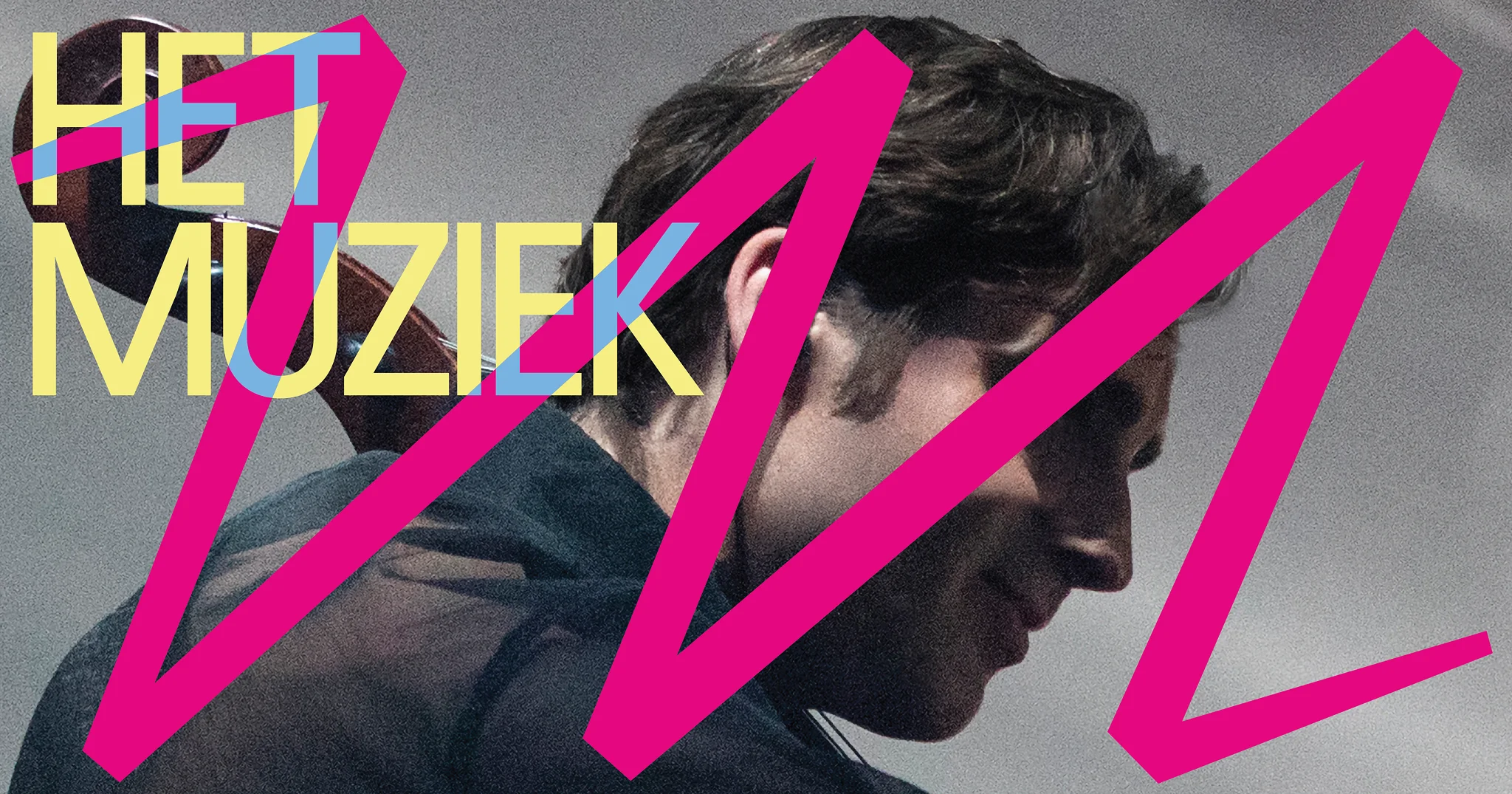
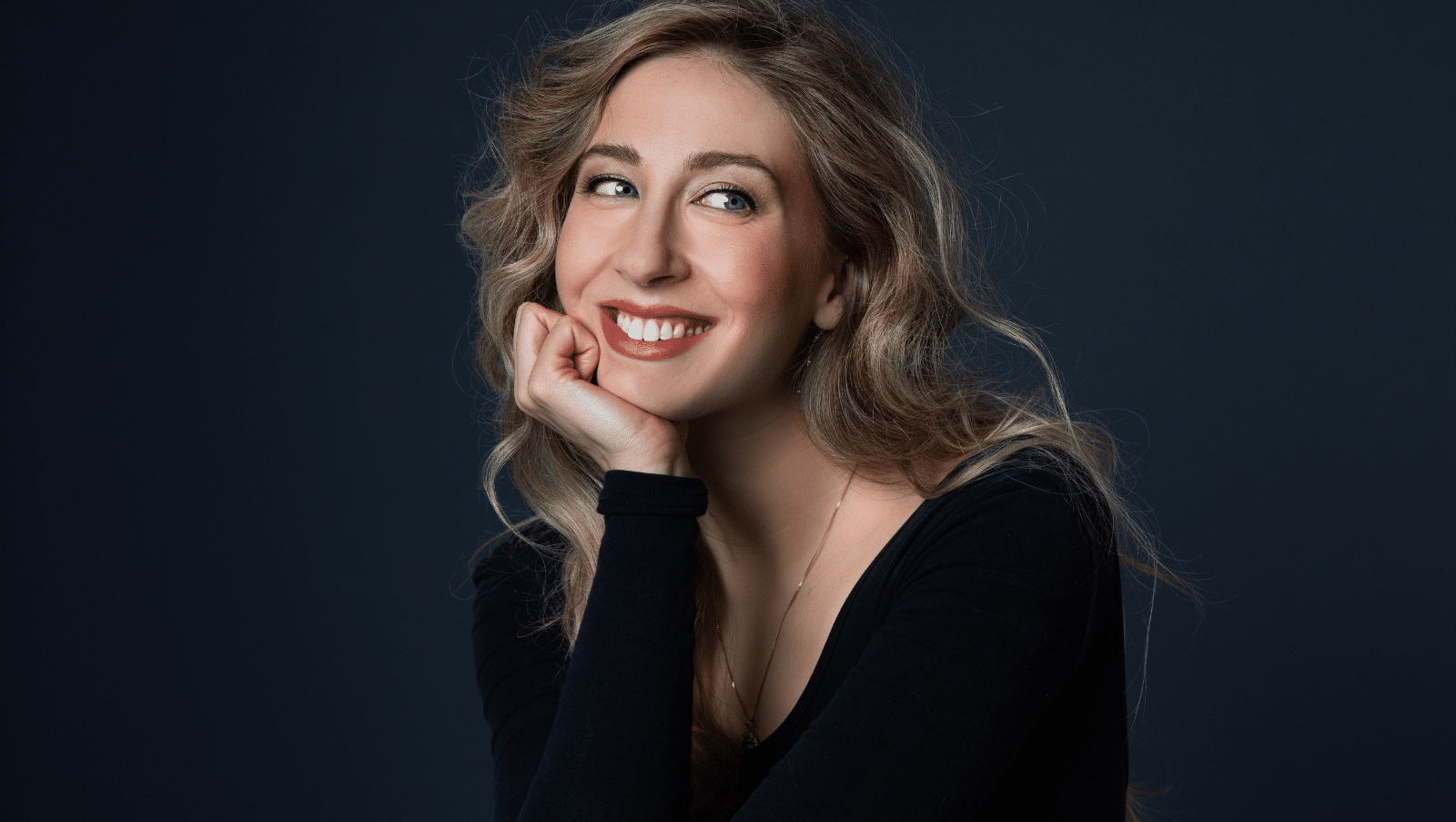
31 August 2026. notes on the forms love takes (2026) is a new music composition by Rozalie Hirs, based on her own poetry. The work was commissioned by Het Muziek (formerly: ASKO|Schönberg or ASKO & Schönberg Ensemble). It was written for the soprano Elisabeth Hetherington (see the photograph below) and Het Muziek.
contents
1. summary
2. listen
3. programme notes
4. details
5. performances
summary
Notes on the forms love takes (2026) is a new music composition by Rozalie Hirs, based on five poems selected from her recent poetry book dagtekening van liefdesvormen (notes on the forms love takes; Querido Publishers, 2024), translated into English by Michele Hutchison, as well as four new poems. The work was commissioned by Het Muziek (formerly ASKO|Schönberg, or ASKO Ensemble and Schönberg Ensemble). It was written for soprano Elisabeth Hetherington and Het Muziek.
The cycle Notes on the forms love takes explores speech and song. Across nine movements, the soprano moves between recited poetry and sung sound poetry. In the odd-numbered movements, five poems by Rozalie Hirs unfold through notated speech melodies, surrounded by softly shifting harmonies generated through ring-modulation calculations. In the even-numbered movements, the sung voice becomes part of the instrumental texture, with the ensemble shadowing, colouring, and extending the soprano.
Microtonal relationships between harmonic partials (Just Intonation) create a musical space in which precise frequency calculation meets the natural contours of the human voice. The work moves between language, micotonal pitch, and ring modulation, tracing a cycle from birth and encounters with nature, friendship, love, and hope towards a meditation on our whereabouts. It culminates in a joyful yet restrained tutti, abruptly interrupted by the ceasing click of a clock, leaving the final speech melody to ponder our wishes, whereabouts, and travels.
listen
We hope to provide a listening link after the premiere.
programme notes
In Notes on the forms love takes (2026), the spoken and sung voice travels through nine shifting microtonal worlds.
In the odd-numbered movements, the soprano recites five poems by Rozalie Hirs, selected from her collection dagtekening van liefdesvormen (notes on the forms love takes, Uitgeverij Querido, Amsterdam, 2026). The English translations by Michele Hutchison appear in Hirs’ forthcoming collection The magic of a possible present (Copper Coin Press, Delhi, 2026). The poems unfold through notated speech melodies, while the instruments create a delicate harmonic space in which the voice can roam freely. These harmonies emerge from ring-modulation calculations applied across a continuum of frequencies.
The even-numbered movements enter a different realm. Here, the soprano sings sound poetry in an imaginary language, accompanied and shadowed by the instruments. The French horn frequently follows the voice at the lower octave, colouring and reinforcing the soprano’s melody. Gradually, the boundaries between singer and ensemble become porous: instrumental sound becomes an extension of the voice, while the voice itself can dissolve into the larger instrumental body.
Throughout the work, precisely calculated microtonal relationships are transformed through ring modulation, allowing individual harmonic series to merge into larger harmonic fields. Just Intonation produces subtle deviations of pitch that are rendered with precision and fluidity. Speech and song thus coexist as two equally vital embodiments of the voice.
The cycle moves from birth (movement 1: seed crystal) to going out into nature and finding friendship (movement 3: manifestations), love (movement 5: notes on the forms love takes), and hope (movement 7: in your presence), culminating in a meditation on our whereabouts (movement 9: paradise of a thousand dreams). These movements are interlaced with experiences of natural phenomena and states of being: daylight and weight (movement 2: come, sun [on gravity]), water (movement 4: water and salt [on necessity]), wind (movement 6: o, wind [on grace]), and an eclipse (movement 8: eclipse [on desire]).
The work culminates in a joyful yet restrained tutti. It is abruptly cut short, leaving behind only the ceasing click of a clock and the final speech melody, which ponders our wishes, whereabouts, and journeys.
details
The work contains nine poems by Rozalie Hirs, four of which were newly written and five were selected from her recent poetry book dagtekening van liefdesvormen (English: notes on the forms love takes; Amsterdam: Querido, 2024). The English translations by Michele Hutchison of these poems ‘seed crystal’, ‘manifestations’, ‘notes on the forms love takes’, ‘as your presence’, and ‘paradise of a thousand dreams’ were devised for Rozalie Hirs’ upcoming English poetry book The magic of a possible present (2026) to appear with Copper Coin Press, Delhi, India.
The nine movements of notes on the forms love takes (2026) are to be performed in uninterrupted succession. The movements are:
1. seed crystal (Dutch poem: ‘entkristal’, translated into English by Michele Hutchison)
2. come, sun [on gravity]
3. manifestations (Dutch poem: ‘uitingen’, translated into English by Michele Hutchison)
4. water and salt [on necessity]
5. notes on the forms love takes (Dutch poem: ‘dagtekening van liefdesvormen’, translated into English by Michele Hutchison)
6. o, wind [on grace]
7. as your presence (Dutch poem: ‘als je aanwezigheid’, translated into English by Michele Hutchison)
8. eclipse [on desire]
9. paradise of a thousand dreams (Dutch poem: ‘duizenddromenparadijs’, translated into English by Michele Hutchison)
commission
notes on the forms love takes (2026) was commissioned by Het Muziek (formerly: ASKO|Schönberg or ASKO Ensemble and Schönberg Ensemble). It was written for the soprano Elisabeth Hetherington and Het Muziek.
dedication
notes on the forms love takes (2026) is dedicated to the soprano Elisabeth Hetherington.
Rozalie Hirs’s new cycle was conceived in dialogue with Claude Vivier’s Bouchara, which forms part of the same premiere concert of notes on the forms love takes. Hirs’s work may consequently be understood as both a companion piece to Vivier’s composition and an In Memoriam, acknowledging the enduring significance of his work and the premature end of his life and compositional career.
instrumentation
flute/alto flute
oboe/ cor anglais
clarinet/ bass clarinet
bassoon
French horn
2 percussionists (woodblocks, crotales, vibraphone, celesta, tubular bells)
piano
soprano
2 violins
viola
cello
double bass
duration
20-25′ ca.
When performed according to the exact tempo indication preferred by the composer, the work has a duration of exactly 20 minutes. At the request of the musicians, the tempo may be slightly reduced, with a corresponding increase in duration.
publisher
The score and part of notes on the forms love takes (2026) can be purchased through its publisher Deuss Music.
performances
13 May 2027, 20:15 CET, Donderdagavond series: Understanding (portrait concert of Elisabeth Hetherington), Het Muziekgebouw aan ‘t IJ (Grote Zaal), Piet Heinkade 5, Amsterdam, The Netherlands – Elisabeth Hetherington (soprano), Gregory Charette (conductor), Het Muziek – world premiere
26 November 2026, 20:15 CET, Understanding (portrait concert of Elisabeth Hetherington), Nieuwe Kerk/Amare, Spui, The Hague, The Netherlands – Elisabeth Hetherington (soprano), Gregory Charette (conductor), Het Muziek – world premiere